If you have a small closet, you already know the struggle — you open the door, stuff falls out, and you can never find what you’re looking for. It’s frustrating, especially when you feel like you’ve tried everything and nothing seems to stick. But here’s the thing: a small closet doesn’t have to mean a chaotic closet. The problem usually isn’t the size, it’s the system. Once you figure out a setup that actually works for your stuff and your habits, everything changes. You stop wasting time digging through piles and you actually start using everything you own.
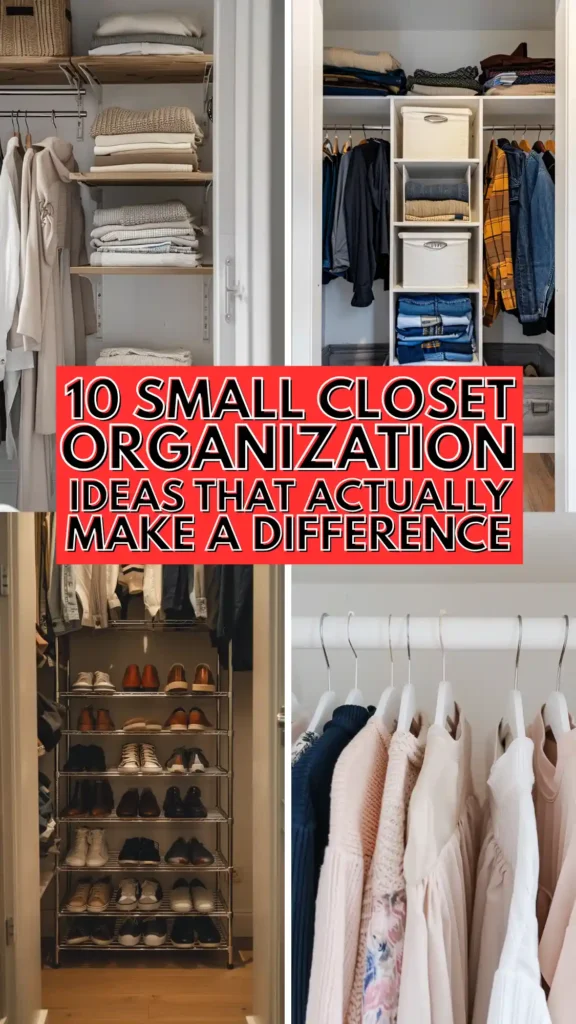
I’ve found that the biggest mistake people make with small closets is trying to stuff in as much as possible without thinking about how they actually get dressed in the morning. Organization has to match your real life, not some perfect version of it. That means thinking about what you reach for every single day versus what you only need once in a while, and making sure the everyday things are the easiest to grab.
The other thing that makes such a difference is going vertical. Most small closets waste all that space above eye level and down near the floor. When you start using every inch — top shelves for seasonal stuff, floor space for bins and shoe racks — suddenly you have way more room than you thought. Add some stackable bins, a few extra hooks, and a double hang rod, and a tiny closet can hold a surprising amount without feeling like a disaster.
You don’t need to spend a lot of money to make this work either. Some of the most effective small closet setups come from simple, affordable pieces used in smart ways. These ten ideas will show you exactly what’s possible.
1. Add a Double Hang Rod to Instantly Double Your Space
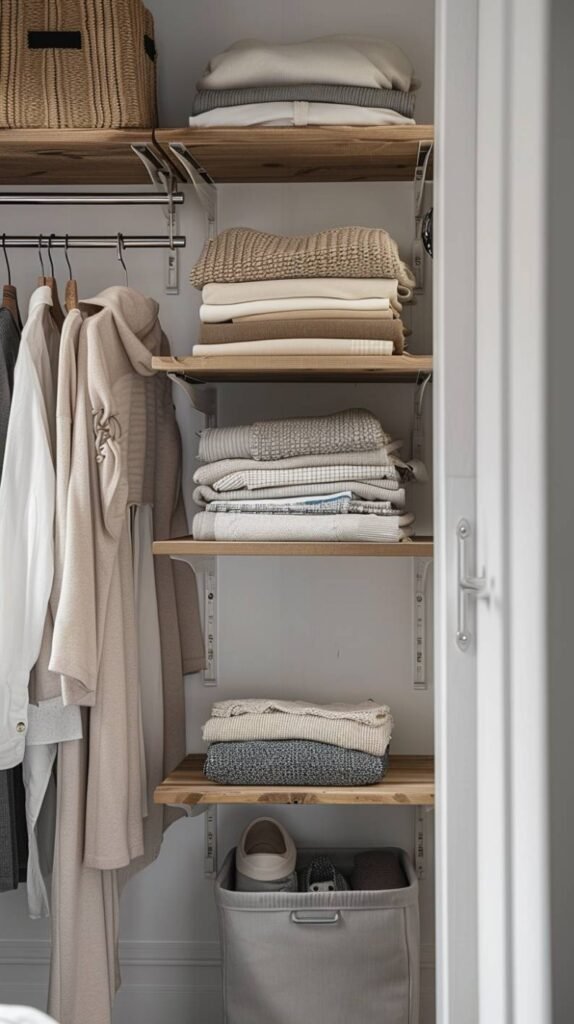
If your closet only has one hanging rod running across the top, you’re leaving half your hanging space empty. Adding a second rod underneath — either a permanent one or a simple hanging extender that hooks onto your existing rod — lets you hang shorter items like shirts, jackets, and folded pants in two rows instead of one. It’s honestly one of the easiest changes you can make and the difference is immediate. Keep the full-length items like dresses and long coats on one side, and use the double rod section for everything shorter. This one small change can literally double your hanging capacity without touching a single wall.
How-To Tip: Hang a closet rod extender (they’re under $15 at most home stores) from your existing rod — no tools needed. Group your shorter items by category on the lower rod so it stays organized and easy to scan.
2. Use the Back of the Door for Bonus Storage
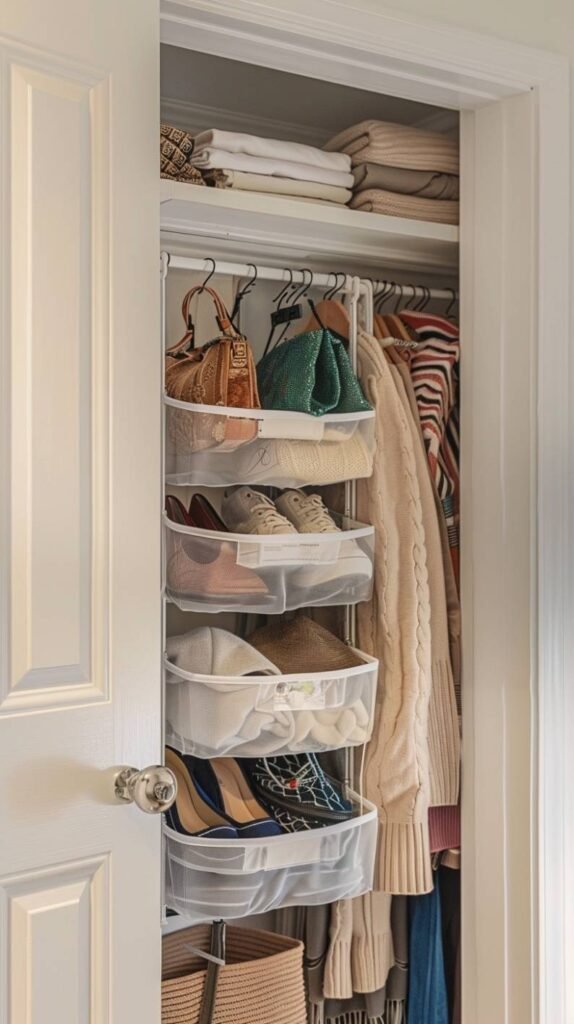
The back of your closet door is basically free storage that most people completely ignore. An over-the-door organizer can hold shoes, accessories, bags, scarves, belts — all the small stuff that usually ends up in a messy pile on the floor or shelf. There are so many options now: clear pocket organizers, hooks, small shelf units that hang over the door. You can even combine a few different types to customize exactly what you need. This works especially well for things you want visible and easy to grab, like your most-worn shoes or your everyday bags. It clears up shelf and floor space inside the closet and makes good use of a spot you were already wasting.
How-To Tip: Measure your door height before buying an over-the-door organizer to make sure it fits without hitting the floor. Clear pockets are the best — you can see everything at a glance without pulling anything out.
3. Stack Bins and Baskets on the Top Shelf
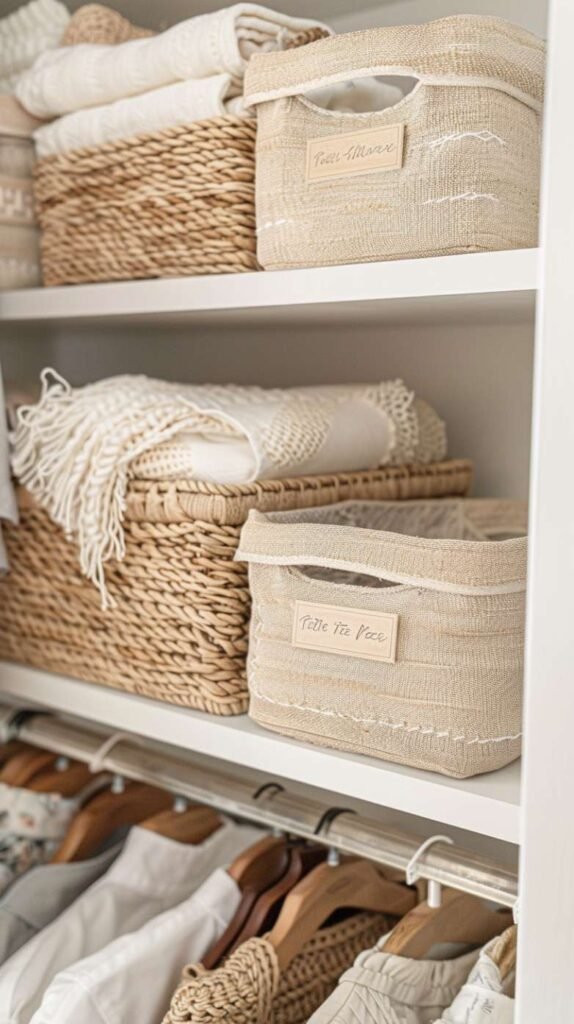
That top shelf in most small closets is where things go to disappear forever — random bags, old hats, things you tossed up there and forgot. Using labeled bins or baskets up there completely changes how usable that space is. Stack them neatly and label each one: seasonal clothes, extra bedding, handbags, workout gear. You can store a surprising amount up high when it’s in containers instead of just loose piles. Use baskets that match or coordinate so it looks intentional rather than chaotic. When everything has a labeled home, you actually put things back where they belong, and that top shelf stays organized instead of becoming a dumping ground.
How-To Tip: Use lightweight woven baskets or fabric bins on the top shelf — they’re easy to pull down without things tumbling out. Label the front of each one with a simple tag so you never have to guess what’s inside.
4. Switch to Slim Velvet Hangers
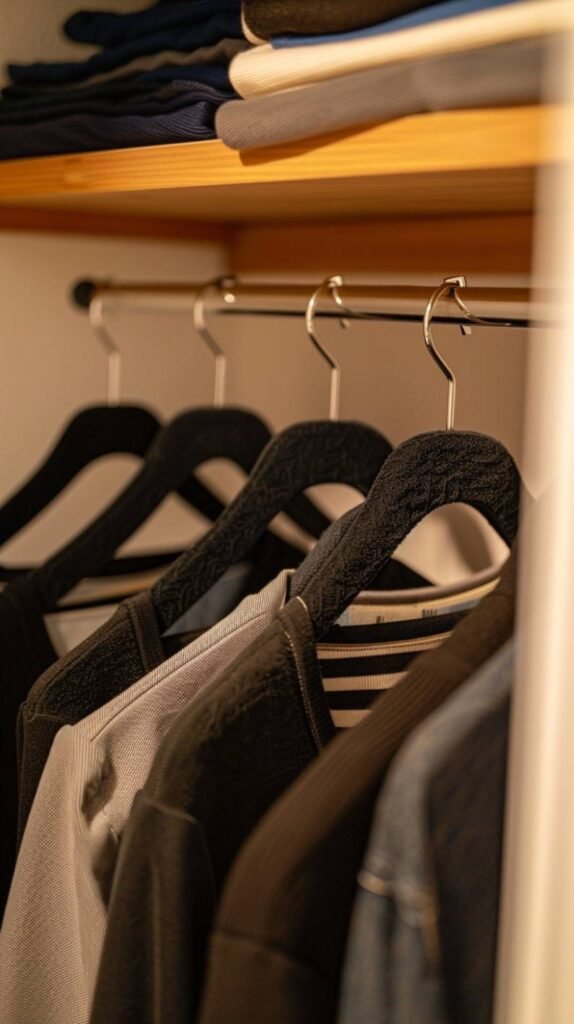
This sounds so simple but it genuinely frees up a shocking amount of rod space. Regular plastic hangers are thick and bulky — switching to slim velvet hangers can almost double the number of items you can hang in the same space. They also keep clothes from slipping off, which means things stay where you put them instead of ending up on the floor. When all your hangers match, your closet instantly looks cleaner and more put-together even if nothing else changes. It’s one of those tiny upgrades that makes your whole closet feel more organized. Do it all at once rather than gradually — the visual difference when everything is matching and slim is really satisfying.
How-To Tip: Buy them in bulk — a set of 50 slim velvet hangers is usually around $15–$20. Do the full switch in one afternoon so you can see the immediate difference in rod space and overall look.
5. Add Hooks to the Side Walls
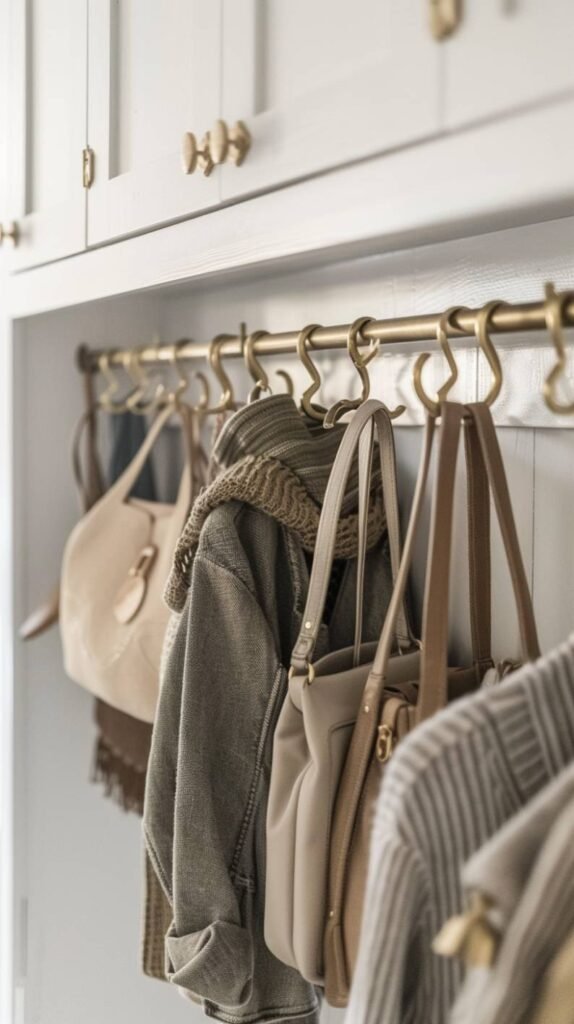
The side walls inside your closet are almost always empty, and they’re perfect for hooks. You can hang bags, belts, hats, robes, jewelry — basically anything that usually ends up draped over a chair or piled on a shelf. Command hooks are great if you don’t want to put holes in the wall, or you can install a small row of real hooks for heavier items. This is especially useful for the things you reach for every single day, like your everyday bag or your most-worn jacket. Keeping them on a hook right inside the closet means they’re visible, easy to grab, and not taking up shelf or floor space.
How-To Tip: Install a row of 3–4 matching metal hooks at eye level on one side wall for bags and frequently worn jackets. Use smaller adhesive hooks on the opposite wall for belts, scarves, and jewelry.
6. Use a Shoe Rack or Stackable Shoe Boxes on the Floor
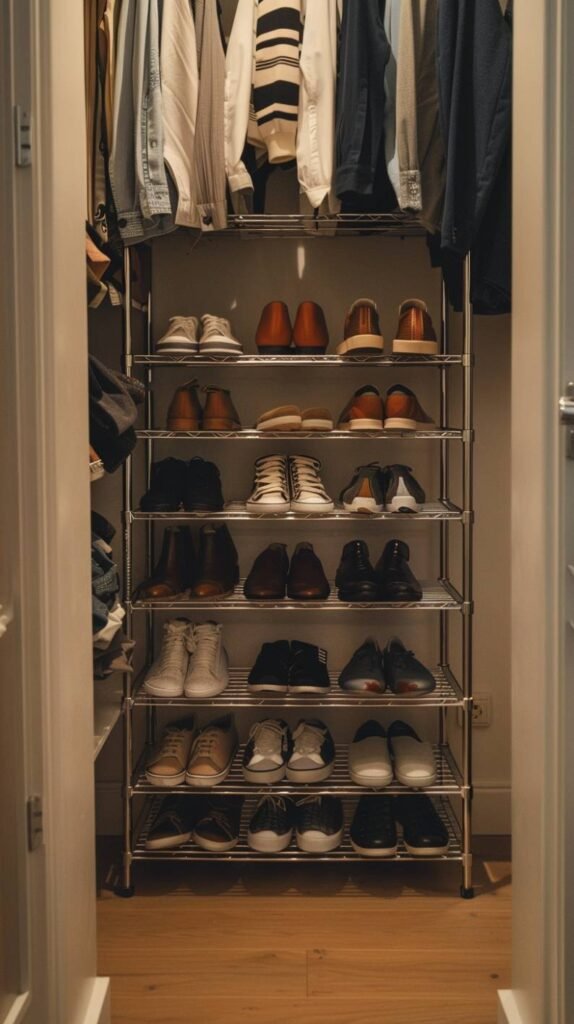
Shoes on the floor of a small closet are chaos — they take up way more space than they need to and you can never find a matching pair. A simple tiered shoe rack or a set of stackable clear shoe boxes changes everything. A floor shoe rack can hold 12–20 pairs in a neat, visible row while using only a foot or two of floor space. Clear stackable boxes let you see exactly what’s inside and stack them as high as your space allows. Either option keeps the floor clear, protects your shoes, and makes getting dressed so much faster when you can actually see all your options.
How-To Tip: Measure your closet floor space before buying a shoe rack — some narrow styles fit in just 10–12 inches of depth. Clear stackable shoe boxes are worth the investment if you have heels or shoes you want to protect.
7. Fold and Store with Drawer Dividers or Small Bins
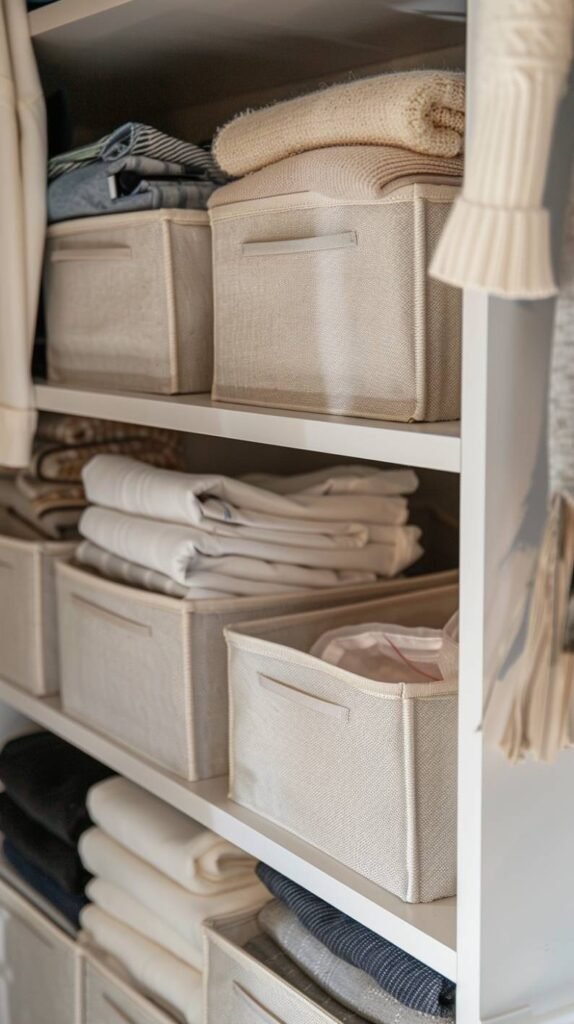
If your small closet has a shelf or a built-in drawer section, adding dividers or small bins inside makes a huge difference. Without dividers, folded clothes turn into a collapsed pile the second you pull one thing out. With dividers, each category stays in its own section — tanks in one spot, workout clothes in another, pajamas in another. You can use actual drawer dividers, small fabric bins, or even repurposed shoeboxes. The key is giving each type of clothing its own defined space so things don’t mix together. It takes maybe 20 minutes to set up and it saves you so much time and frustration every single morning.
How-To Tip: Try the KonMari folding method — folding clothes into small rectangles that stand upright in bins so you can see every item at a glance without unstacking anything.
8. Install a Small Shelf Unit on the Floor
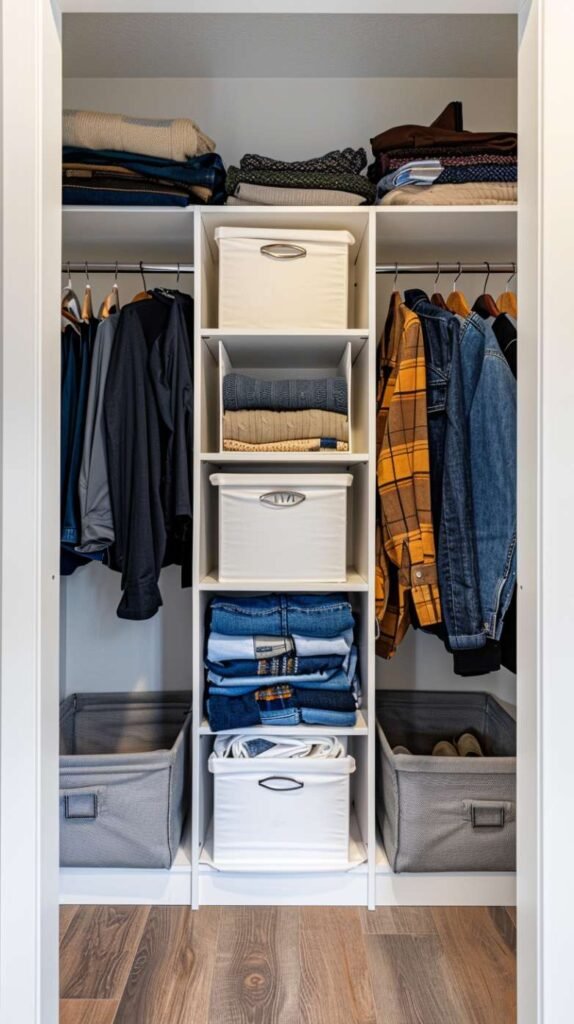
If your closet doesn’t have built-in shelving on the floor level, adding a small freestanding shelf unit down there creates a whole extra storage zone. A narrow cube organizer or a small bookshelf can hold folded sweaters, jeans, shoes, or bins — essentially giving you a dresser drawer inside your closet without actually needing a dresser. This is a game-changer if you’re short on bedroom furniture. You can find narrow shelving units that are specifically designed to fit in closets, or just use any small bookshelf that fits. Style it with matching baskets in the cubbies for a clean look, or use the open shelves for folded items you want visible.
How-To Tip: A 3-cube organizer from any home store fits perfectly in most standard small closets and holds a surprising amount. Add fabric bins in each cube to keep things contained and looking neat.
9. Organize by Category and Color
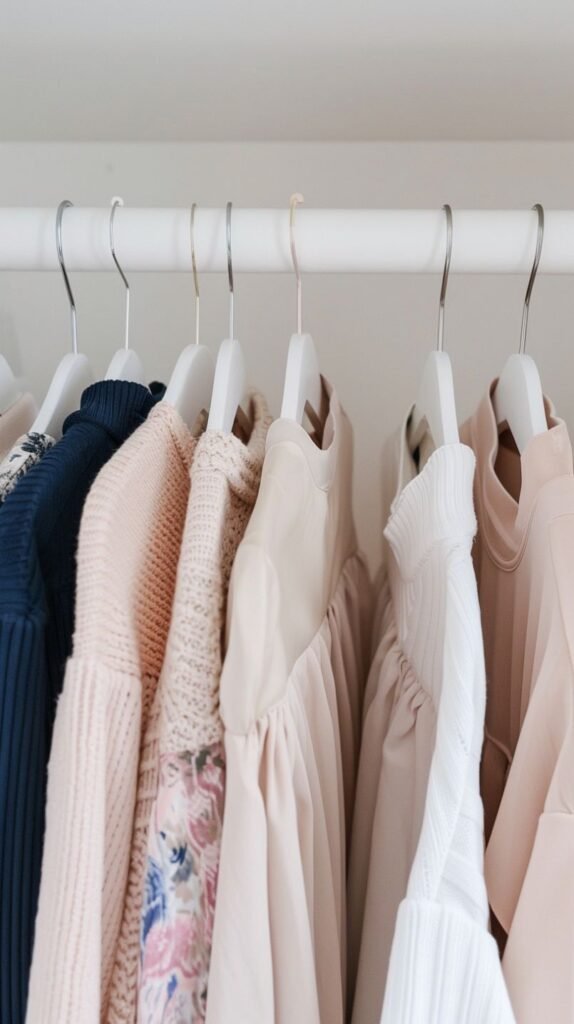
This one doesn’t cost anything but it makes your closet look and function so much better. Grouping clothes by category first — all tops together, all bottoms together, dresses, jackets — and then by color within each category means you can find anything in seconds. It also shows you exactly what you have so you stop buying things you already own. When your closet is color-coded, it genuinely looks beautiful when you open the door, which makes you actually want to keep it that way. It’s one of those habits that feels a little extra until you do it, and then you can’t imagine going back to the random jumble you had before.
How-To Tip: Start with just one section — all your tops, for example — and arrange them light to dark. Once you see how good it looks you’ll want to do the whole closet. It takes less than 30 minutes total.
10. Declutter First — Before You Organize Anything
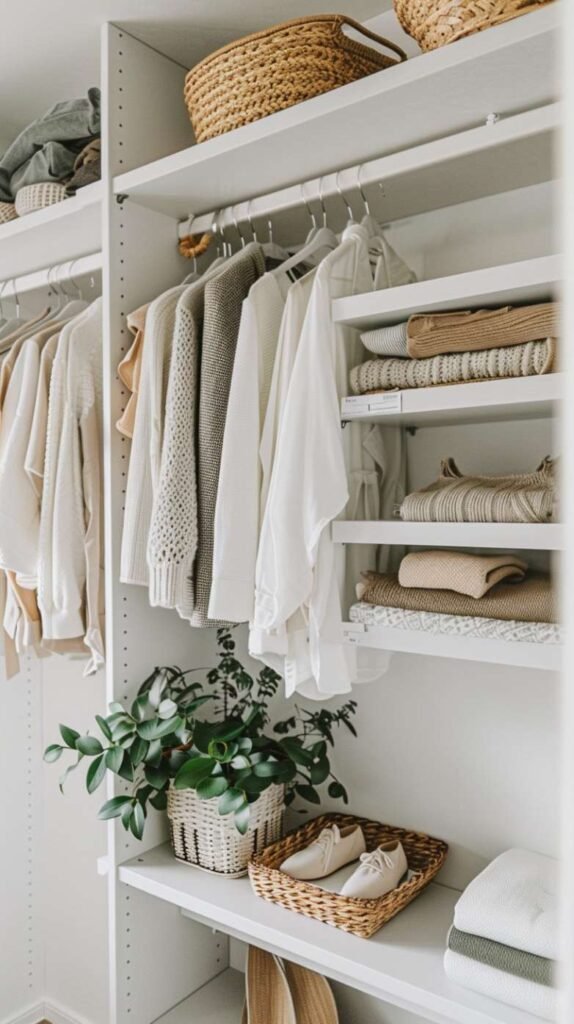
Nothing in this list will work long-term if you skip this step. If your small closet is full of things you don’t wear, don’t love, or don’t even remember owning, organizing around them just creates an organized version of the same problem. Go through everything before you set up any system and be honest with yourself. If you haven’t worn it in over a year, if it doesn’t fit right, if you keep skipping over it when you get dressed — let it go. Once you clear out what doesn’t belong, you’ll be amazed how much easier everything else becomes. A small closet with only things you actually wear is so much more functional than a large closet stuffed with things you’re just storing.
How-To Tip: Use the one-year rule — if you haven’t worn it in the last 12 months and it’s not a true special occasion piece, it goes. Do this before buying a single bin or organizer.