

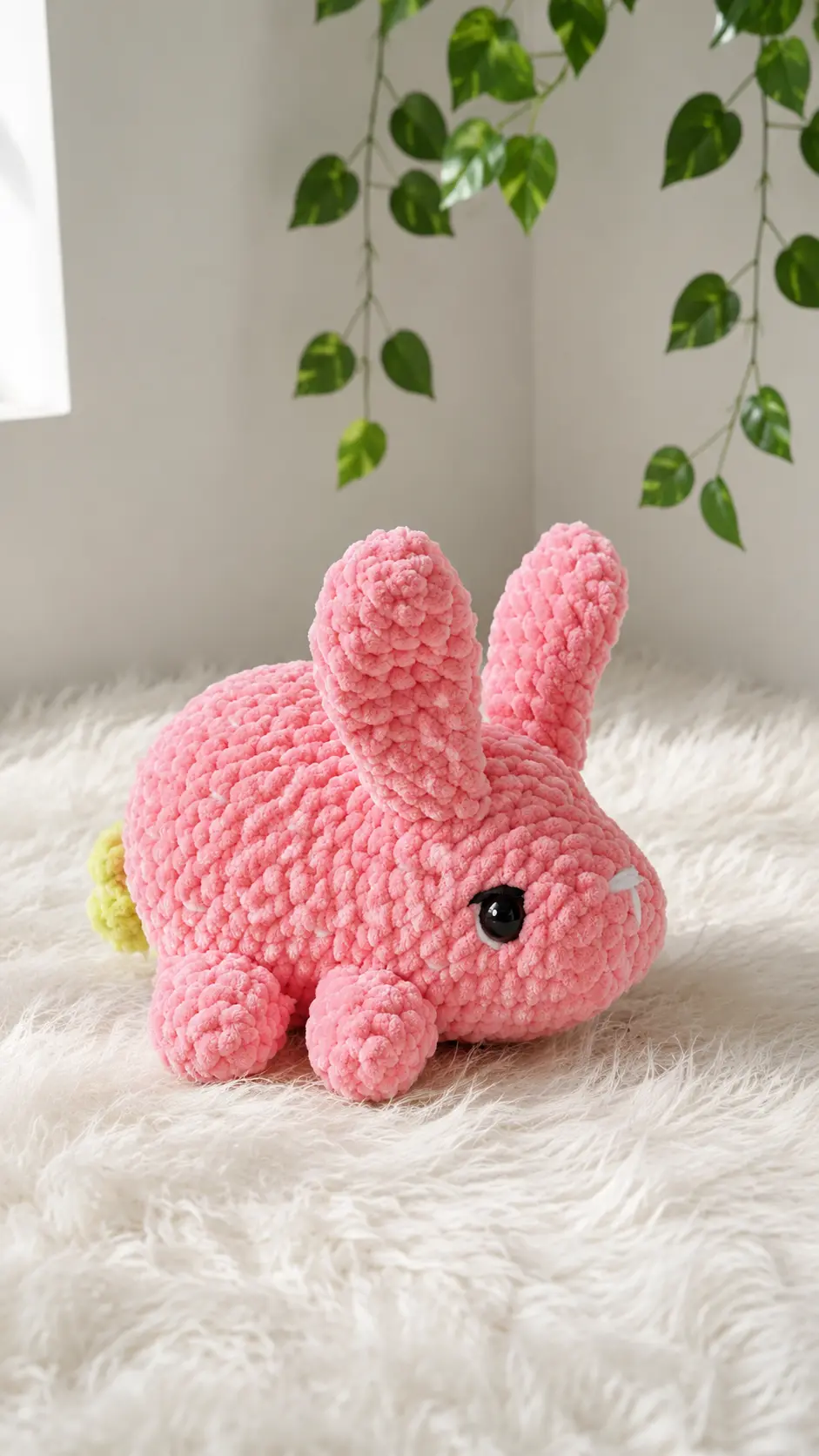
I have a confession. I went to the craft store last Tuesday just to pick up one skein of yarn, and I came home with four. In my defense, the Cotton Candy pink called my name from across the aisle, and once it was in my hands I could already picture exactly what I wanted to make with it.
My daughter has been going through a phase where everything in her life needs to be either pink or strawberry-themed, sometimes both. Her water bottle, her phone case, her socks. So when I sat down that evening after the kids were in bed and started crocheting this little strawberry bunny, I felt like I was crocheting something made for exactly her. The combination of that soft rosy pink with the little green kiwi tail just came out so well. She spotted it on the kitchen counter the next morning before school and said “Mom, that is the most adorable thing you have ever made.” I wrote that down. I am keeping it forever.
Materials Needed
- Hobbii Toucan (colour: Cotton Candy) – main colour
- GoHandmade Happy Chunky “fine” (colour: Kiwi Green) – secondary colour
- White cotton/acrylic yarn for embroidering strawberry seeds and nose
- 4.5mm crochet hook
- 12mm safety eyes
- Stuffing
- Stitch marker(s)
- Sewing needle
- Scissors
Feel free to experiment with different yarn types and colours!
Finished Size
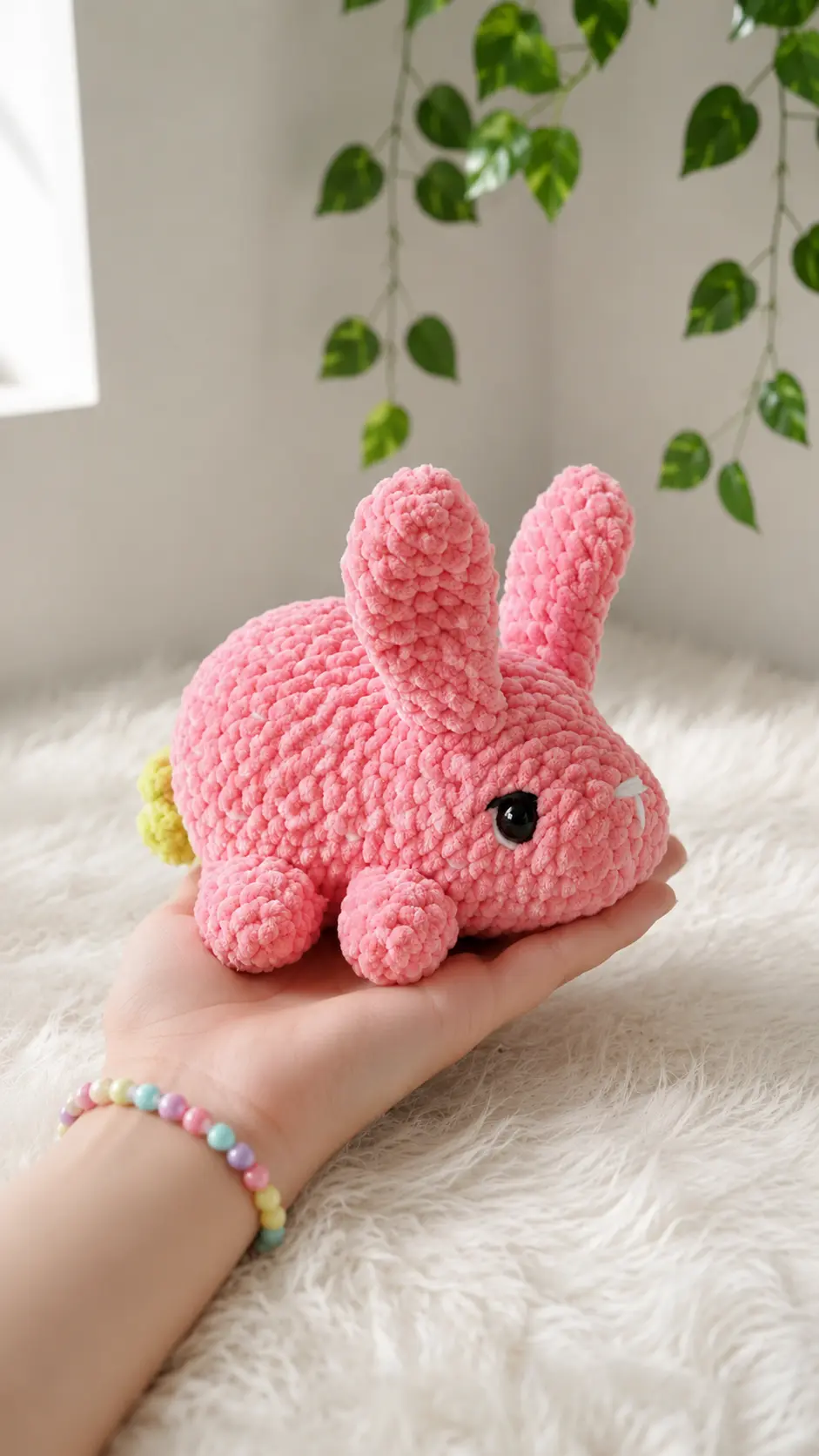
Not specified in the pattern. Size will vary depending on yarn weight and tension. With the recommended yarn, the bunny is a palm-sized plush toy.
Abbreviations
- R – round
- CH – chain
- MR – magic ring
- SC – single crochet
- SLST – slip stitch
- HDC – half double crochet
- INC – increase
- DEC – invisible decrease
- FO – fasten off
- ST(S) – stitch(es)
Pattern Instructions
Body (in main colour)
Keep stuffing the body as you go.
- R1: 6sc in MR (6)
- R2: 6inc (12)
- R3: (sc, inc)x6 (18)
- R4: sc around (18)
- R5: 6sc, (inc, sc)x3, 6sc (21)
Mark the middle increase of R6 for later.
- R6: 9sc, 3inc, 9sc (24)
- R7: sc around (24)
- R8: (3sc, inc)x6 (30)
Place the eyes between R6 & R7, each eye should be 1inc and 3sts away from the R6 marker.
- R9-11: sc around (30) 3 rounds
- R12: 7sc, (2sc, dec)x4, 7sc (26)
- R13: 7sc, (2sc, inc)x4, 7sc (30)
- R14: sc around (30)
- R15: 6sc, (2sc, inc)x6, 6sc (36)
- R16: sc around (36)
- R17: 6sc, (inc, 3sc)x6, 6sc (42)
- R18-22: sc around (42) 5 rounds
- R23: (5sc, dec)x6 (36)
- R24: (4sc, dec)x6 (30)
- R25: (3sc, dec)x6 (24)
- R26: (2sc, dec)x6 (18)
- R27: (sc, dec)x6 (12) finish stuffing
- R28: 6dec (6)
FO, sew the hole closed, tuck away the yarn tail.
Front Legs (in main colour, make 2)
- R1: 6sc in MR (6)
- R2: (sc, inc)x3 (9)
- R3: sc around (9)
- R4: (sc, dec)x3 (6)
Stuff lightly.
- R5: sc around (6)
FO, leave a yarn tail for sewing.
Back Legs (in main colour, make 2)
- R1: 6sc in MR (6)
- R2: (sc, inc)x3 (9)
- R3: sc around (9)
- R4: (2sc, inc)x3 (12)
- R5: (2sc, dec)x3 (9)
- R6: sc around (9)
Stuff lightly.
- R7: (sc, dec)x3 (6)
- R8: sc around (6)
FO, leave a yarn tail for sewing.
Ears (in main colour, make 2)
- R1: 6sc in MR (6)
- R2: (sc, inc)x3 (9)
- R3: (2sc, inc)x3 (12)
- R4-6: sc around (12) 3 rounds
- R7: (2sc, dec)x3 (9)
- R8-10: sc around (9) 3 rounds
Don’t stuff. FO, leave a yarn tail for sewing.
If you’d like to make longer ears, just crochet more rounds of sc around and then FO.
Small Tail (in secondary colour)
- R1: 6sc in MR (6)
- R2: (ch4, starting at 2nd ch 3sc, slst into the next st)x6
FO, leave a yarn tail for sewing.
In the assembly section we will combine the small and big tail together, so you should MAKE BOTH.
Big Tail (in secondary colour)
- R1: 6sc in MR (6)
- R2: 6inc (12)
- R3: (ch5, starting at the 2nd ch 2sc, 2hdc, skip one st, slst)x6
FO, leave a yarn tail for sewing.
Assembly
Standing Ears
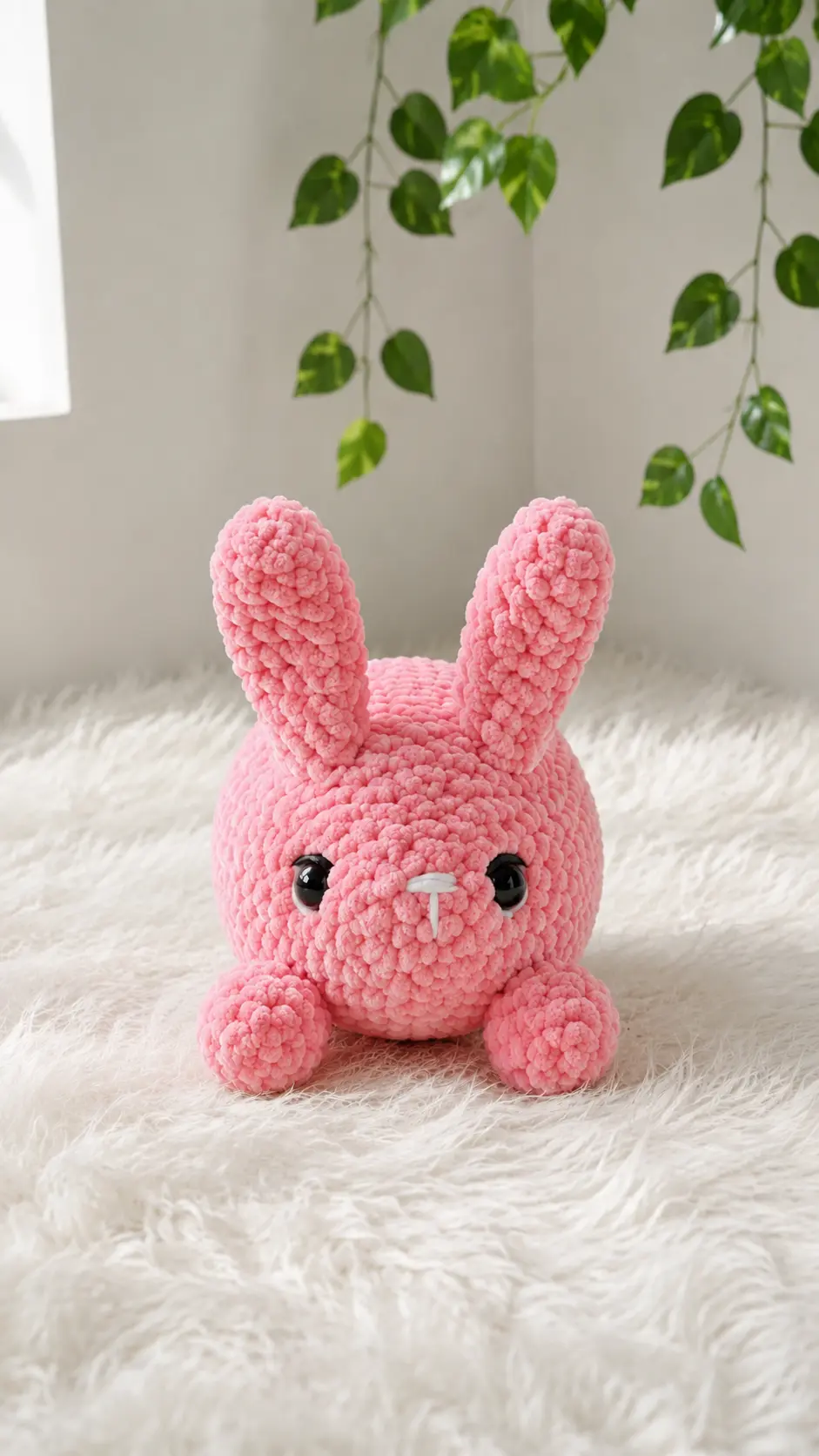
The ears should cover R8 until R11 and there should be about 5sts between them. Centre with the marker from R6.
Attach the ears in a way that the “longer” part of the ear is on the bottom. This will make them naturally point up.
When attaching the ears I like to create a “zig-zag” shape with the yarn working through 1 stitch of the ear & one of the head until I’ve covered the whole row. Then I just pull the yarn tight and repeat on the other half of the ear.
Relaxed Ears
The ears should cover R8 until R11 and there should be about 5sts between them. Centre with the marker from R6.
Attach the ears in a way that the “longer” part of the ear is on the top. This will make them naturally point down.
When attaching the ears I like to create a “zig-zag” shape with the yarn working through 1 stitch of the ear & one of the head until I’ve covered the whole row. Then I just pull the yarn tight and repeat on the other half of the ear.
To help the ears lay flat against the bunny’s head, thread the yarn out below the ear and sew the ear fixed to the head.
Front Legs Assembly
Make sure that the legs are centred with the marker from R6. Fold in half & attach on the bottom of the bunny, between R13 & R14. There should be 5 visible stitches between them.
To keep the legs in place and achieve the desired look, you can use a strand of yarn and securely sew the legs to the bun’s body.
Tail Assembly
Big tail: Line up the MR of the tail with the body’s MR. For an easier sewing process you can pin each leaf of the tail to the body and sew securely.
Small tail: Line up the MR of the small tail with the big one’s. Sew the small tail by making a few sts around the MR. DO NOT sew the leaves to the body.
Back Legs Assembly
Regular: Make sure that the back legs are centred with the front legs. Fold in half & attach on the bottom of the bunny, between R21 & R22. MAKE THEM FACE THE FRONT OF THE BUNNY. There should be abt 7 visible stitches between them.
To keep the legs in place and achieve the desired look, you can use a strand of yarn and securely sew the legs to the bun’s body.
Relaxed: Make sure that the back legs are centred with the front legs. Fold in half & attach on the bottom of the bunny, between R21 & R22. MAKE THEM FACE THE TAIL OF THE BUNNY. There should be abt 7 visible stitches between them.
Face Shaping
If you’d like for your bunny to have a more defined face shape, you can follow these instructions.
- Insert the yarn through a random point A and out a point B right under the bunny’s eye.
- From there, insert the hook into a Point C right to the side of that eye and out on the other side of the bunny’s face.
- Repeat this action pulling the yarn tightly 2 to 3 times to get the eyes settled a bit deeper into the bunny’s face.
- Once finished, pull the yarn out in the middle of the face, through the centre of the MR.
- Then insert it about 3 rows below and out the centre again, pull tightly and repeat 2 to 3 times to get a more defined snout.
- Embroider the nose, strawberry seeds and add any details that you see fit.
Tips for Success
Use your stitch marker early and keep it in place. The R6 marker is mentioned again and again throughout this pattern. It guides your eye placement, your ear placement, and how you center the front legs. Do not skip it or remove it too soon. Keep it right there until you are fully done with assembly.
Stuff lightly for the legs. The pattern specifically says to stuff the legs lightly, and that makes a big difference. Too much stuffing makes the legs stiff and they won’t sit naturally against the body. A small pinch of fiberfill is all you need.
Make both tail pieces before assembly. The small tail and big tail get layered on top of each other. It’s easier to have both ready and then line up the MRs together when sewing, rather than trying to add one later.
Choose your ear style before you attach them. Standing and relaxed ears are attached in opposite orientations. Read both options first and decide which look you want before you start sewing. Switching after the fact is very hard with chunky plush yarn.
Go slow with the face shaping. The face shaping technique involves pulling yarn through the body to sink the eyes in and define the snout. It takes a little patience but the result is so worth it. Pull gently and repeat 2-3 times as the pattern says rather than yanking it all at once.
Chunky yarn hides small imperfections. If your stitch counts are off by one or your tension changes slightly in the middle, this style of plush yarn covers a lot. Don’t stress too much over perfection, especially on your first go.
Frequently Asked Questions
What can I substitute for Hobbii Toucan yarn? Any bulky or super bulky chenille or velvet-style plush yarn will work well. Brands like Bernat Blanket, Lion Brand Pound of Love velvet, or Paintbox Simply Chunky are commonly available in the US and give a similar soft result. The important thing is to choose a yarn that’s not too stiff or too stretchy so your stitches hold their shape.
Can I use different colors for the body? Absolutely, yes. The pattern was designed for a strawberry look in red or pink, but this bunny would be just as sweet in lavender, cream, mint, or any color you love. You can also change the secondary color for the tail and use whatever green or contrasting color you prefer.
How do I know if I put the eyes in the right place? The pattern says to place each eye between R6 and R7, with each eye being 1inc and 3sts away from the R6 marker. If you marked that middle increase of R6 as the pattern instructs, it makes eye placement much more straightforward. Place the safety eyes before closing up too much of the body.
My ears don’t seem to be staying in position. What can I do? For standing ears, make sure you attached the longer part of the ear facing down. For relaxed ears, the longer part should face up. If they still won’t cooperate, the pattern suggests threading yarn out below the ear and tacking it down with a few stitches against the head. That little extra sewing step makes a big difference in how the finished bunny looks.
Can I sell the finished bunny I make from this pattern? Yes, according to the pattern notes, finished products made from this pattern can be sold in handmade quantities. The pattern itself is for personal use only and should not be copied, redistributed, or claimed as your own.
Conclusion
Some crochet projects feel like work and some feel like pure joy from the very first stitch. This crochet strawberry bunny is one of those joyful ones. Every round is simple enough to follow while still watching TV or sitting outside in the yard, and the finished result looks so much more impressive than the effort it took.
My daughter keeps her pink strawberry bunny on her nightstand now, right next to her lamp. I noticed it sitting there one evening when I went to say goodnight, and I just felt that quiet kind of happy that comes from making something with your hands and seeing it land exactly where it belongs.
If you make your own strawberry bunny, I hope it brings that same feeling to someone in your life, or maybe just to yourself. You deserve something cute on your shelf too.

Leave a Comment